Planning a trip to Mount Kilimanjaro is exciting, but one of the most important things every traveler should understand is the weather. Unlike many other destinations, Kilimanjaro has several climate zones because of its height. You can start your trek in a warm tropical forest and finish it in freezing temperatures near the summit. This dramatic change surprises many first-time visitors who expect the weather to remain the same throughout the journey. Knowing what weather conditions to expect will help you pack the right clothing, choose the best trekking season, and enjoy a safe and successful adventure.
Whether you are climbing to Uhuru Peak or visiting the surrounding national park, understanding Kilimanjaro’s weather is essential. This complete guide explains everything first-time visitors need to know in simple English to help you prepare for an unforgettable experience.
Mount Kilimanjaro stands at 5,895 meters (19,341 feet) above sea level, making it the highest mountain in Africa. Because of its impressive height, the weather changes dramatically from the base to the summit. Many visitors are surprised to experience sunshine, rain, wind, cold temperatures, and even snow within a single trek. Unlike other mountains, Kilimanjaro creates its own weather patterns due to differences in altitude. This means you cannot rely only on the forecast for nearby towns such as Moshi or Arusha. Preparing for every type of weather increases your comfort and safety while improving your chances of reaching the summit successfully.

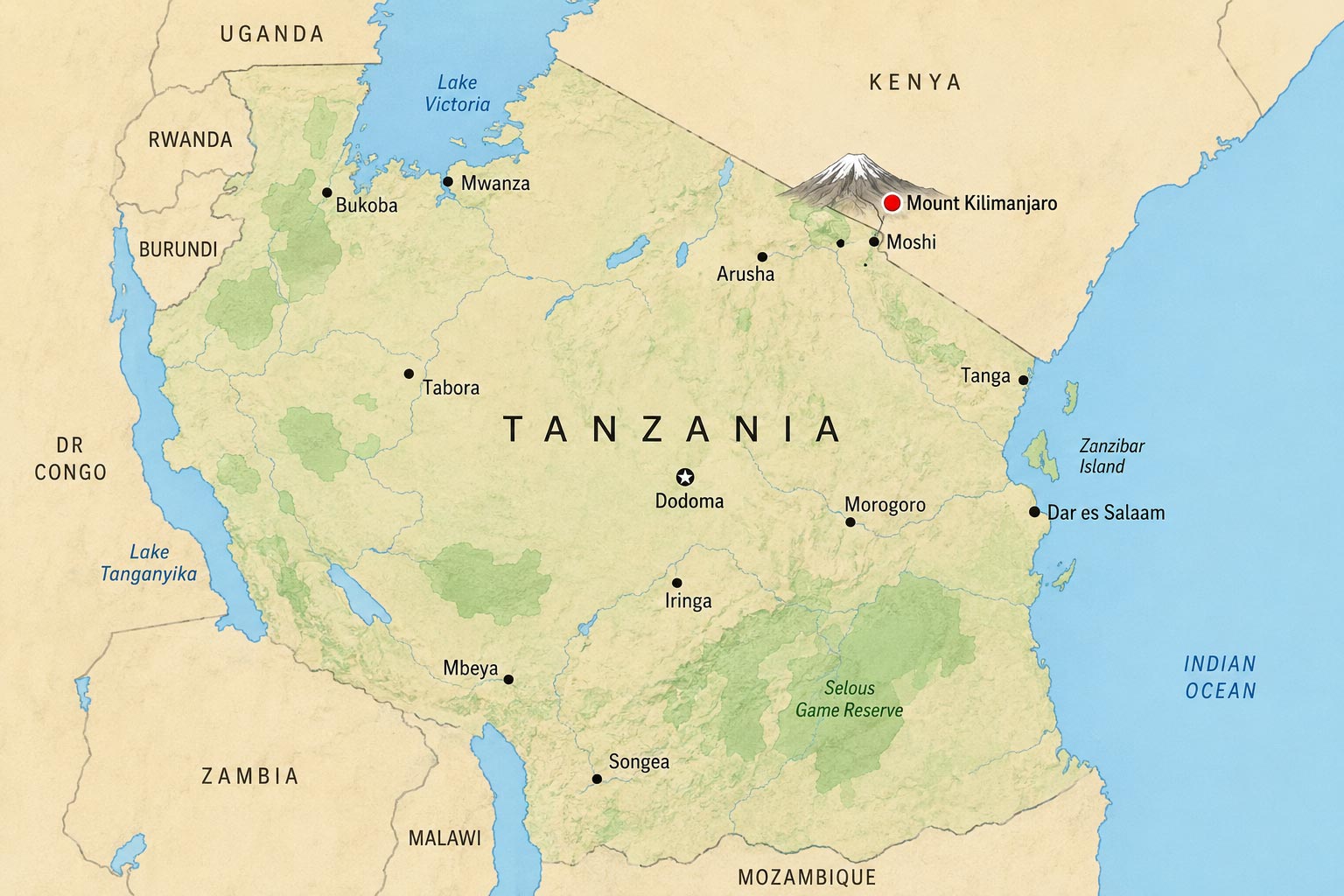
Mount Kilimanjaro is located in northern Tanzania, close to the border with Kenya. It lies just south of the equator, which means many travelers expect a hot climate throughout the year.
While the lower slopes are warm and tropical, temperatures become much colder as you climb higher. The mountain rises above the surrounding plains and creates different climate zones that are completely different from one another. This unique location makes Kilimanjaro one of the few places in the world where you can experience several weather conditions in a single journey.
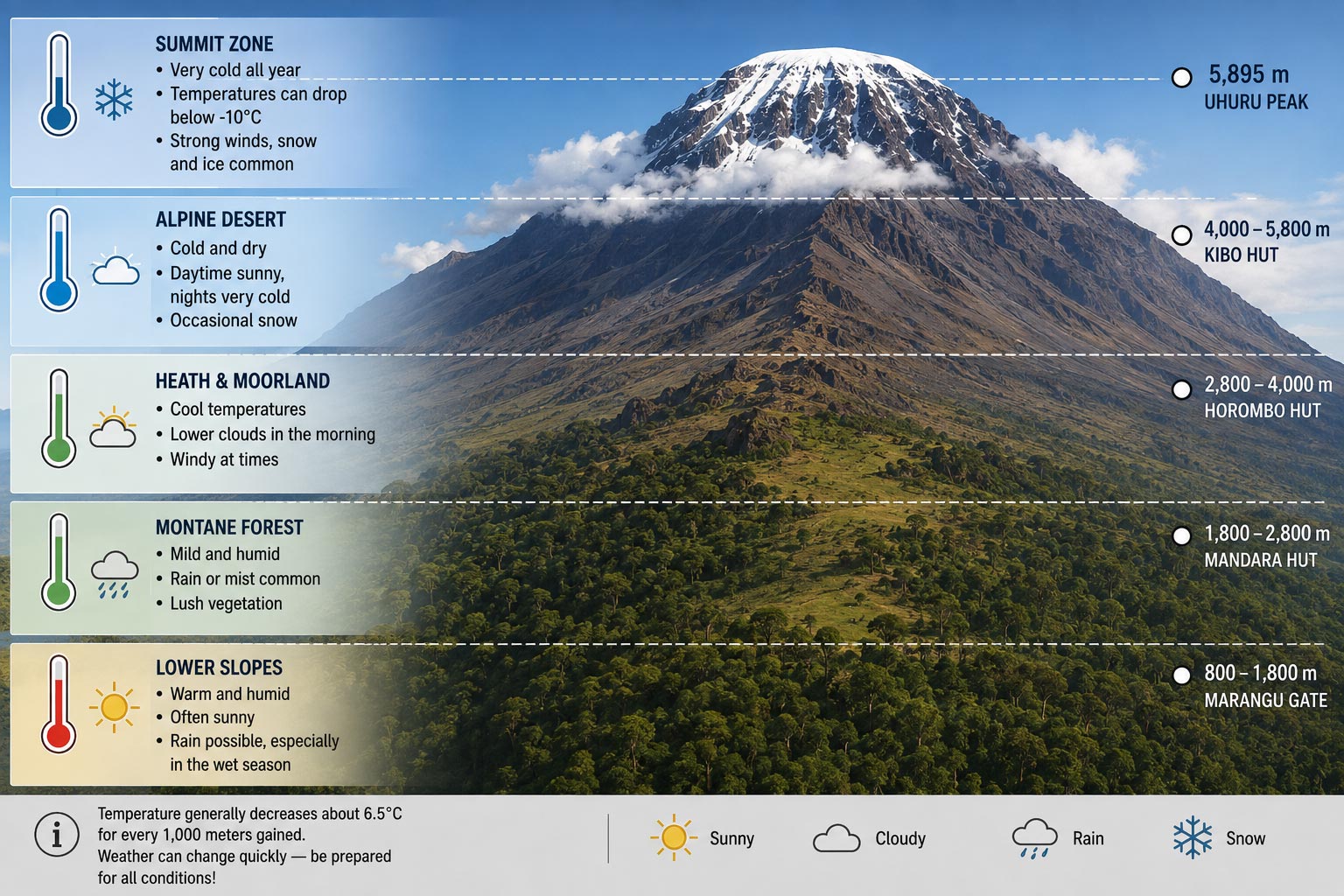
One of the most fascinating features of Kilimanjaro is how quickly the weather changes as you gain elevation. Every 1,000 meters of climbing brings cooler temperatures and different environmental conditions. The air becomes thinner, humidity decreases, and strong winds become more common near the summit. During the day, lower areas may feel hot enough for short sleeves, while summit temperatures can fall well below freezing. This rapid change is why layering clothes is far more effective than wearing one heavy jacket.
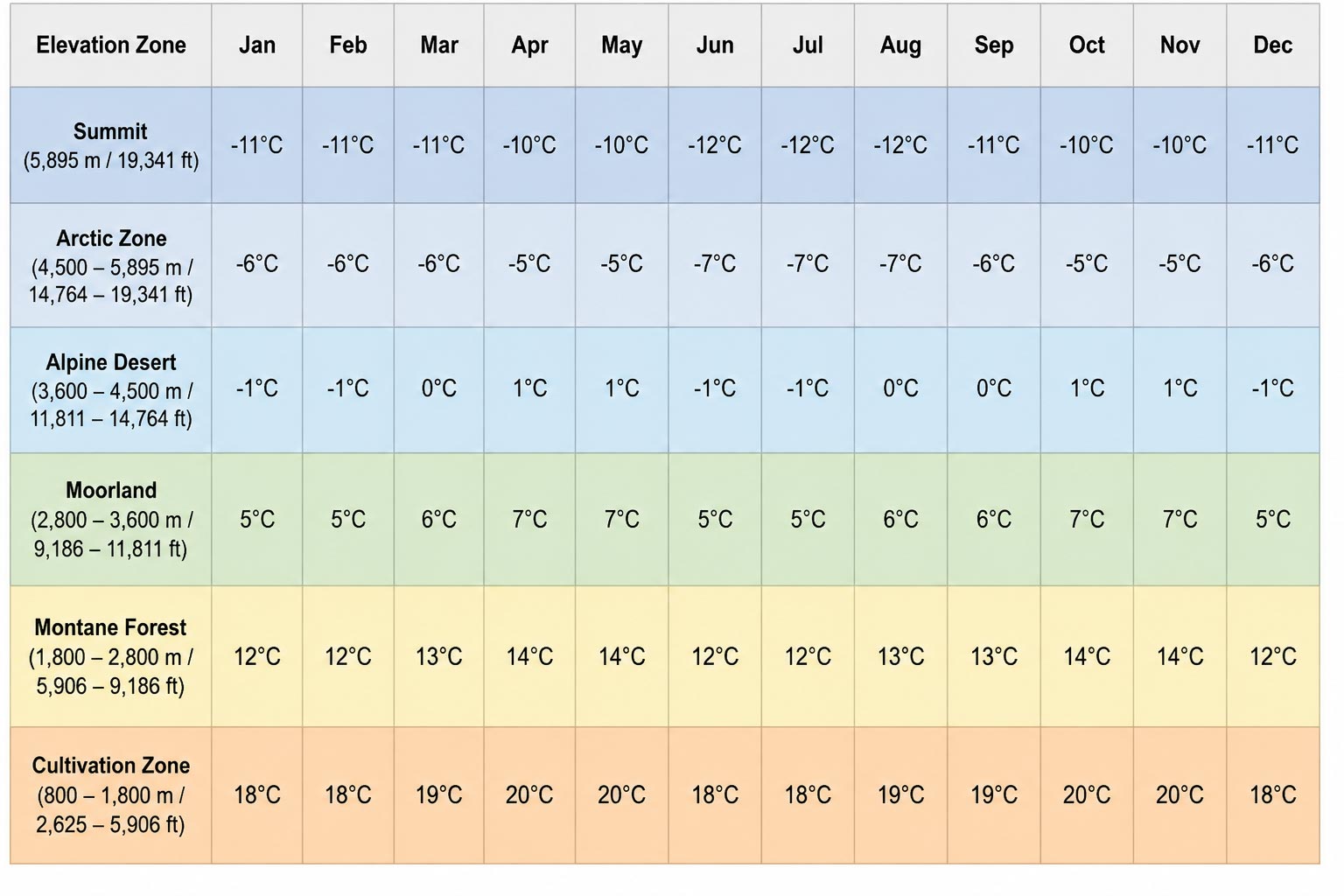
The cultivation zone covers the lower slopes of Kilimanjaro where local communities grow bananas, coffee, maize, and vegetables. Temperatures are generally warm throughout the year, ranging between 20°C and 30°C (68°F to 86°F). Rainfall is common, creating fertile farmland that supports nearby villages. Visitors often begin their journey through this pleasant environment before entering the national park. The weather here is comfortable, but occasional showers can appear even during the dry season.
The rainforest zone is one of the wettest parts of Kilimanjaro. Thick forests, tall trees, colorful flowers, and wildlife thrive because of frequent rainfall and high humidity. Temperatures usually range from 15°C to 25°C (59°F to 77°F), making the climate cool but comfortable. Rain can occur at any time of year, especially during the rainy seasons. Waterproof jackets, rain covers, and quick-drying clothing are essential when trekking through this beautiful but damp environment.
As you climb above the rainforest, the landscape changes dramatically. Trees become smaller, shrubs replace dense vegetation, and wide open views begin to appear. Daytime temperatures usually range between 10°C and 20°C (50°F to 68°F), while nights become much colder. The air feels drier, and sunshine during the day can be surprisingly strong. Visitors should wear sunscreen, sunglasses, and layered clothing because temperatures change quickly between morning and evening.
The alpine desert zone is dry, rocky, and exposed to intense sunlight during the day. Rain is uncommon, but temperatures vary significantly between daytime and nighttime. During the day, the sun feels powerful because of the thinner atmosphere, while nighttime temperatures often fall below freezing.
The summit zone has conditions similar to the Arctic despite being located near the equator. Temperatures frequently range between -20°C and -7°C (-4°F to 19°F), especially before sunrise during summit night. Snow, ice, frost, and freezing winds are common throughout much of the year. Oxygen levels are significantly lower than at sea level, making every step feel more difficult.
First time climbers should always expect changing weather rather than hoping for perfect conditions. Dressing in layers allows you to add or remove clothing as needed throughout the day. Drink plenty of water even when temperatures feel cold because dehydration increases the risk of altitude sickness. Always carry rain gear in your daypack since mountain weather can change without warning. Listening carefully to your guides and following their advice will help you stay safe regardless of the conditions.
Packing for Kilimanjaro means preparing for every climate zone. Lightweight clothing works well for lower elevations, while insulated jackets become essential near the summit. Waterproof jackets, waterproof trousers, thermal base layers, gloves, hats, sunglasses, and hiking boots should all be included in your packing list. Moisture-wicking clothing keeps you comfortable during long hiking days, while warm sleeping gear improves your rest at high-altitude camps. Layering your clothing allows you to adjust easily as temperatures change throughout the day.

Temperature depends more on altitude than on the season. Lower elevations remain warm throughout the year, while higher elevations stay cold regardless of the month. At the park gate, daytime temperatures often reach 25°C (77°F). Around base camps, temperatures may drop close to freezing during the night. At the summit, freezing conditions are normal throughout the year. Because weather changes quickly, trekkers should always prepare for both warm afternoons and icy mornings.
Rainfall varies significantly depending on altitude and season. The rainforest receives the highest amount of rain because moist air rises along the mountain slopes and cools rapidly. Higher elevations receive much less rainfall but experience snow and ice instead. Even during dry months, brief showers are always possible. Carrying waterproof clothing and protecting electronics inside dry bags are smart precautions regardless of the season.
Many first-time visitors are surprised to discover snow near the equator. The summit area often remains covered with snow and glaciers, although their size has decreased over the years due to climate change. Snowfall is more likely after rainy seasons when moisture reaches higher elevations. Regardless of snowfall, freezing temperatures remain common near the summit throughout the year.
Wind becomes stronger as altitude increases. Lower slopes are generally calm, but exposed ridges and summit areas often experience powerful gusts. Cold wind can make temperatures feel much lower than the thermometer indicates. Wearing windproof outer layers helps prevent heat loss and keeps you comfortable during exposed sections of the trek. Properly securing hats and backpacks is also important because sudden gusts are common.
Only the higher elevations remain cold throughout the year. Lower areas stay warm because of their tropical climate, while summit temperatures are below freezing in every season.
Snow can occur at any time near the summit, although snowfall varies depending on weather patterns. Freezing temperatures are common regardless of whether fresh snow has fallen.
Yes. Thousands of beginners successfully climb Kilimanjaro each year with proper preparation, good fitness, experienced guides, and enough time for acclimatization.
Many travelers prefer January, February, July, August, and September because these months usually offer drier conditions and clearer mountain views.
Absolutely. Sunshine can quickly turn into rain, wind, or freezing temperatures as you gain altitude. Always be prepared for changing conditions during your trek.
Need help? Our team is just a message away